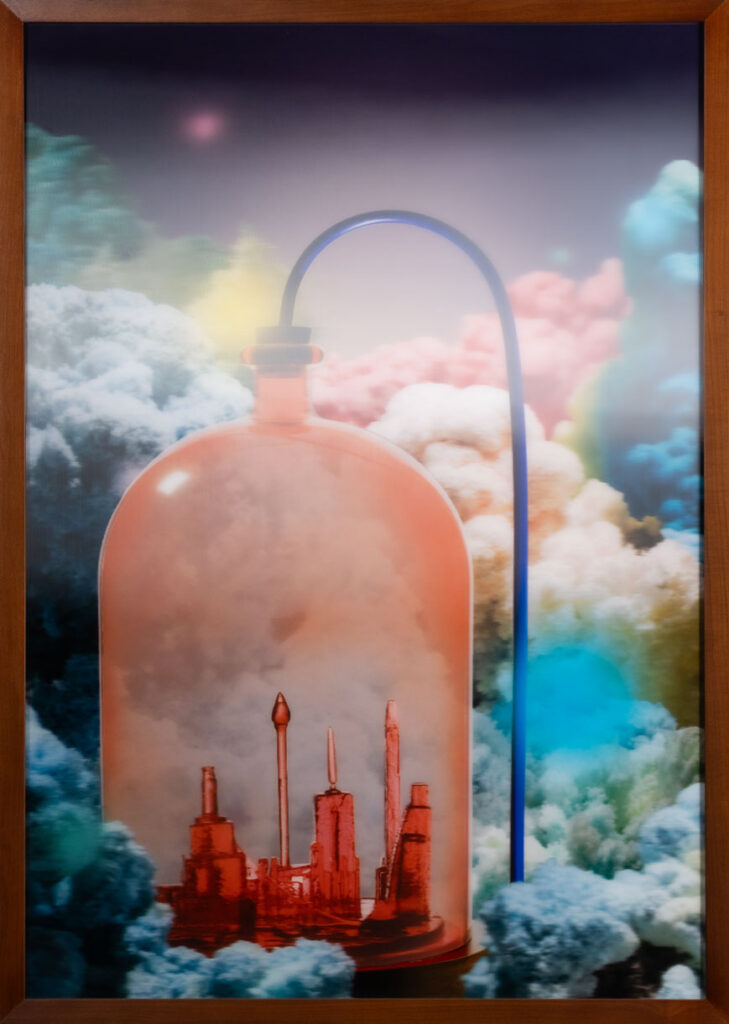
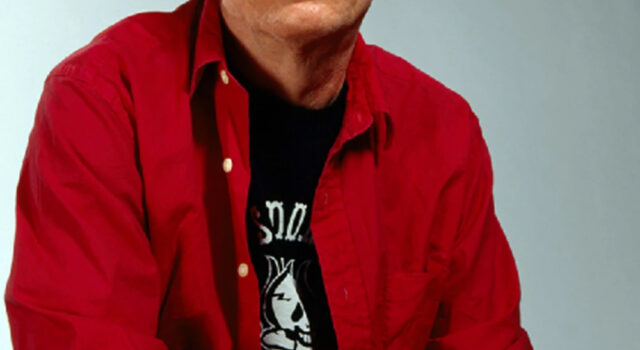

Mike Kelley was a significant figure in contemporary art, known for his exploration of cultural memory, social structures, and personal identity. Trained at the University of Michigan and the California Institute of the Arts, he studied under conceptual artists like Douglas Huebler and John Baldessari. From the beginning, his work engaged with themes of childhood, education, and societal expectations, often using everyday objects such as stuffed animals, toys, and found materials. Through sculpture, installation, performance, and video, Kelley reinterpreted these familiar elements, exposing tensions between nostalgia, repression, and the constructed nature of identity.
His approach to art was both critical and deeply engaged with popular culture, though not in a celebratory way. Unlike Warhol’s detached fascination, Kelley viewed mass culture as something shaped by hidden anxieties and contradictions. He collaborated with artists such as Paul McCarthy, Tony Oursler, and Raymond Pettibon and was closely connected to the punk and experimental music scenes, working with bands like Sonic Youth and Iggy Pop. Music and performance played a significant role in his practice, reflecting a broader interest in subcultures and the ways people construct meaning through collective expression. His work was layered with irony and dark humor but also carried a sense of sincerity in its examination of human experience.
Over the years, Kelley’s work was exhibited at major institutions, including the Whitney Museum of American Art, MoMA PS1, the Centre Pompidou, and the Museum of Contemporary Art in Los Angeles. Despite his success, he struggled with personal difficulties, and in 2012, he died by apparent suicide. His work continues to be studied and exhibited, remaining an important reference for artists and scholars interested in themes of memory, social critique, and psychological depth. His influence persists not as a static legacy but as an evolving dialogue about the intersections of culture, identity, and art.